
Cutting returns in fashion: what actually works
A fashion return is often decided before the order, when the customer picks a size. What works: deal with size upstream, record every reason, and send the information back to the grading.
We do not simply advise a size on a product page. We run the professional clothing season: the campaign, the wearer, the order, the return, the restock and the alert that warns you.
Brands, retailers, pure players, property owners and B2B suppliers who have deployed our size recommendation since 2013.










The same engine serves all three of the things we sell. It starts from a person’s body shape rather than from the size chart on the label, and it takes brand, cut and fabric into account.
Depending on the layer you deploy, it advises a shopper on a product page, outfits a wearer inside a company campaign, or decides what can come back and go into stock again.
And what a person enters once, they keep: reusing their morphological profile is their own decision, from one order to the next and from one Fitizzy brand to the next. A customer who has met Fitizzy elsewhere can therefore reach you with their morphology already there, and you open on a recommendation rather than on a form.

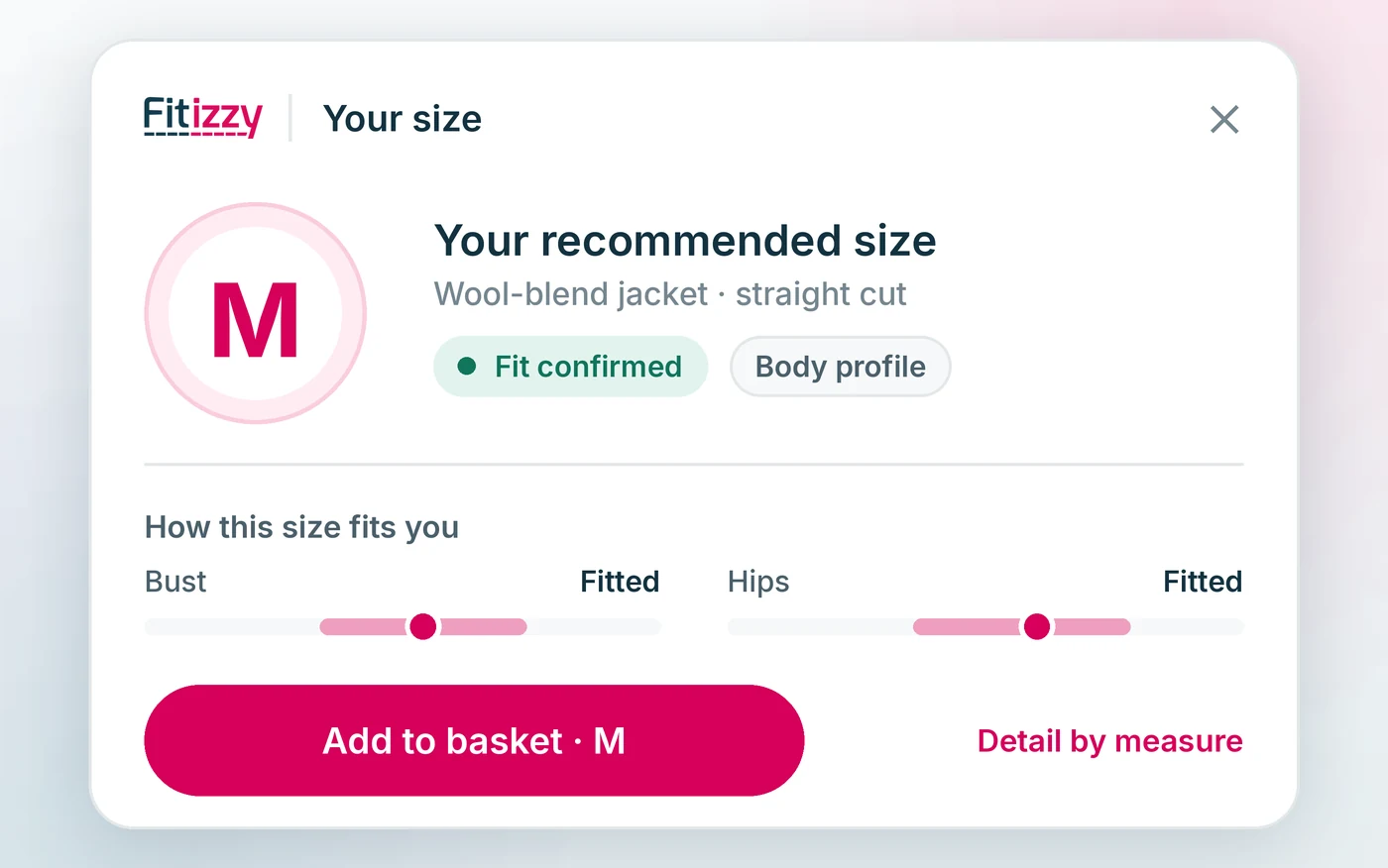
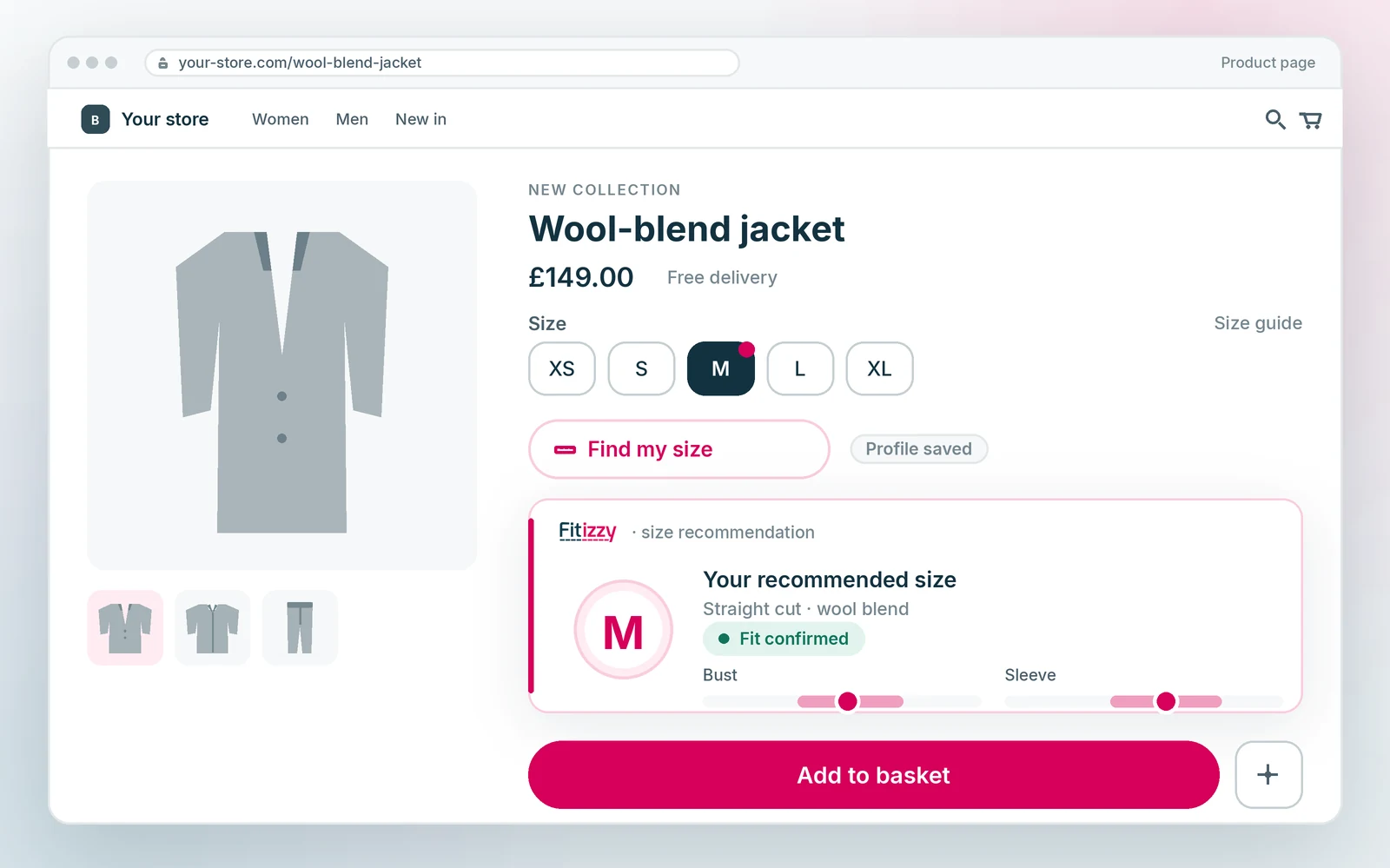
A fully customisable size recommendation plugin, embedded in your product page.
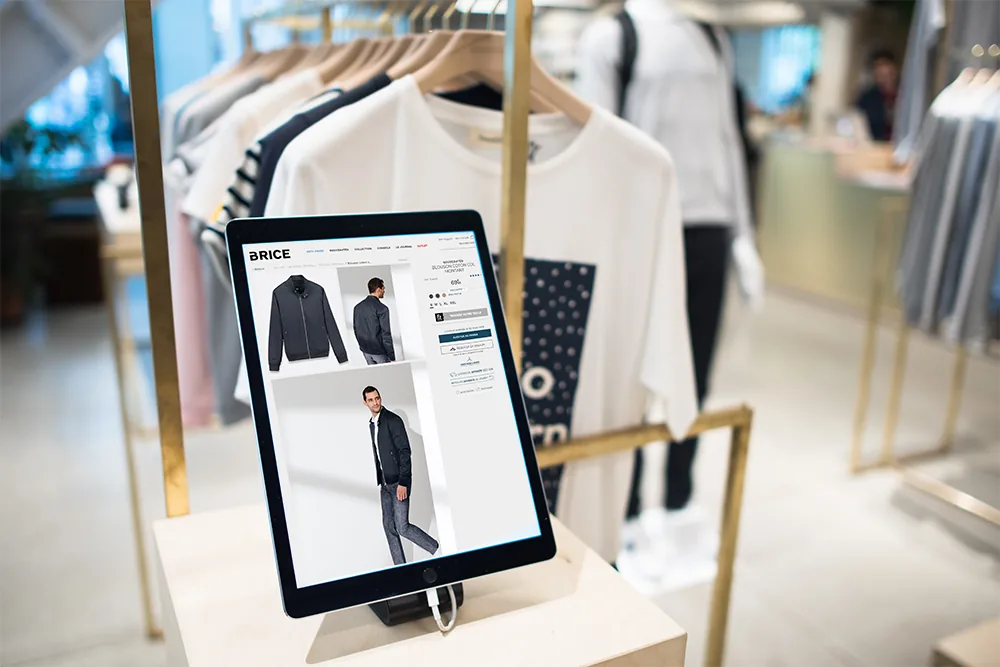
Fitiroom, a mobile app and an SDK to advise on the right size at the point of sale.

Automate size allocation for your employees’ workwear, PPE and uniforms.
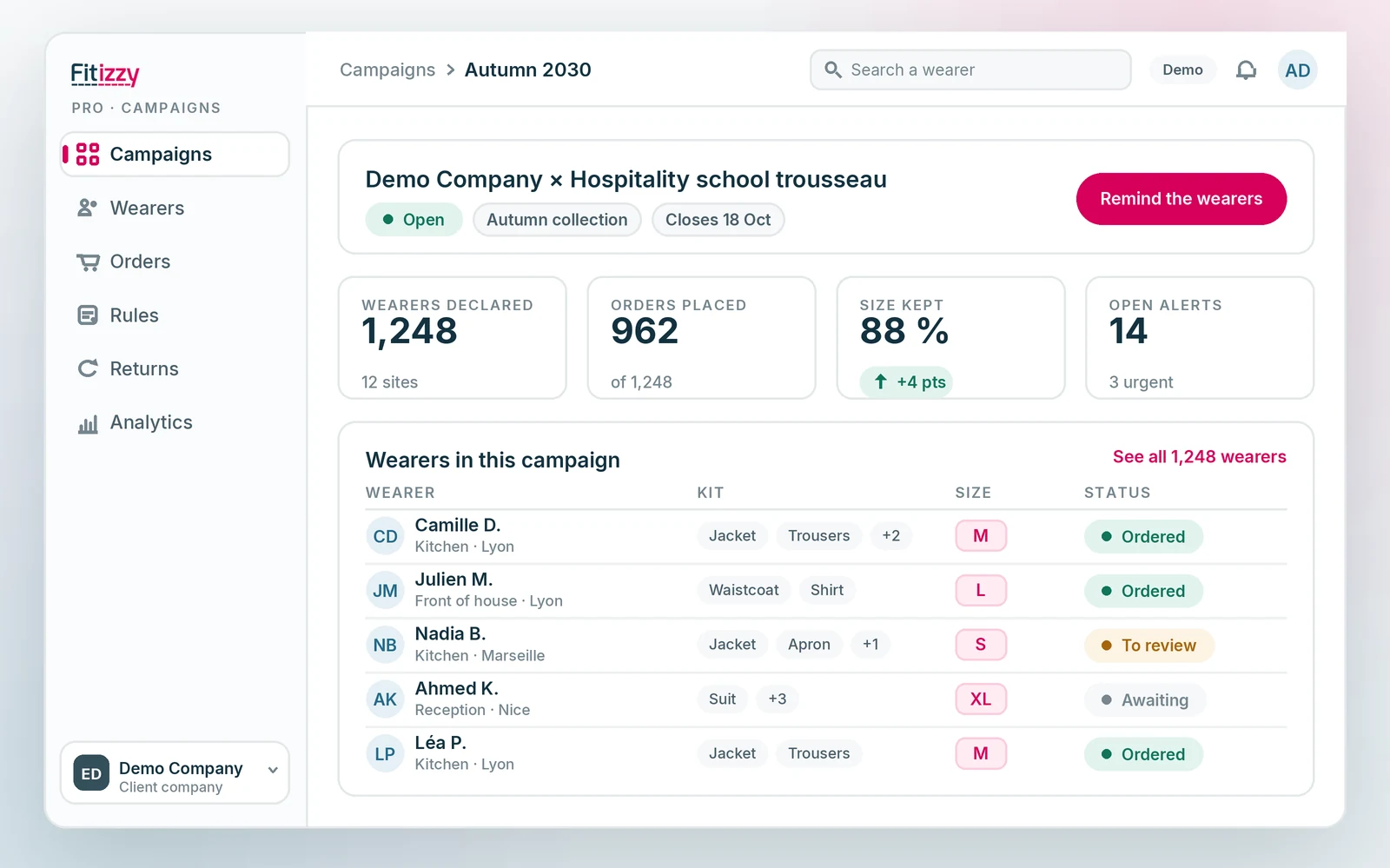
A campaign brings together one company and one collection, its wearers, their orders and the rules that alert you.
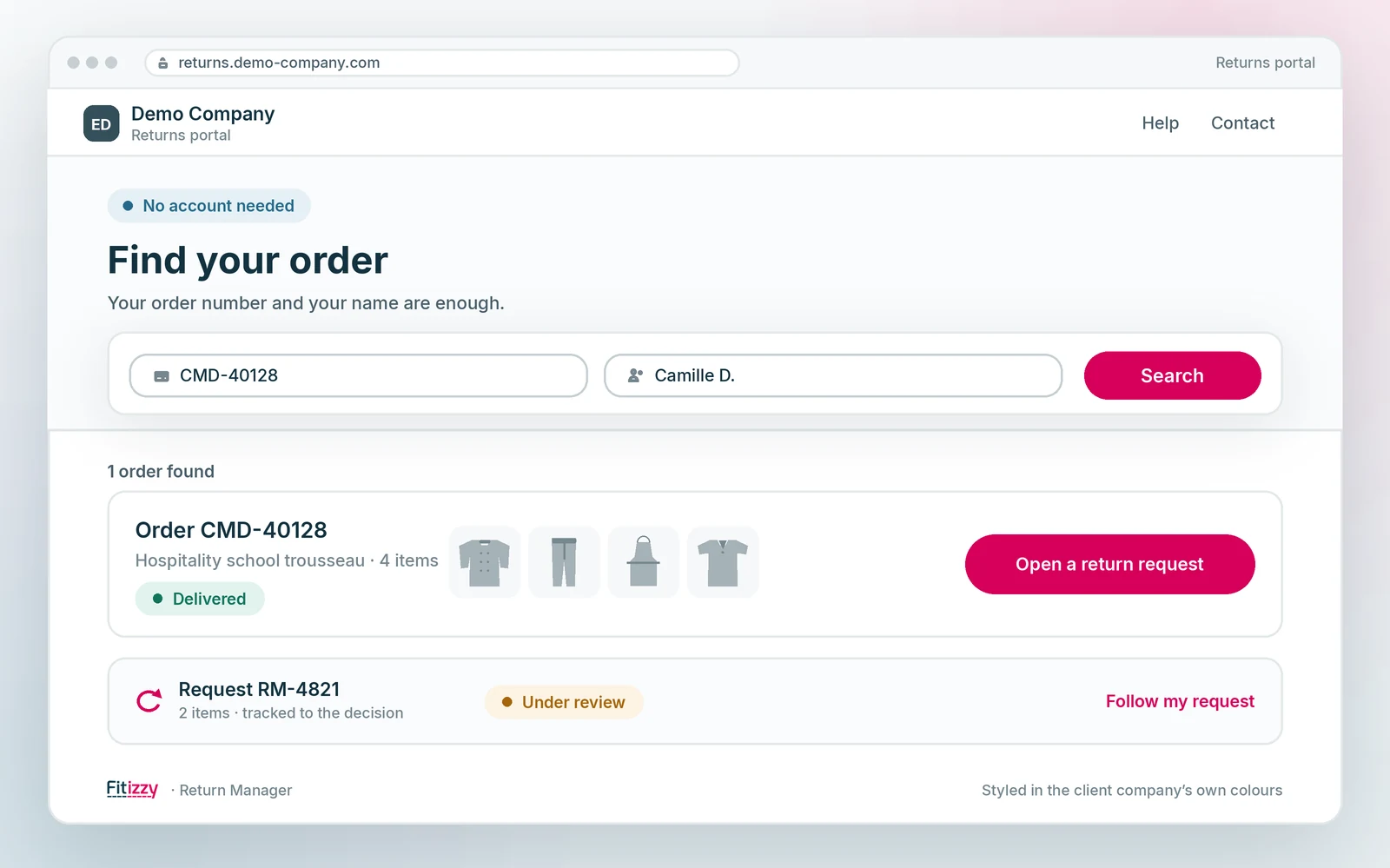
A white-label returns portal for each client company: order search, submission, tracking and restock lots.
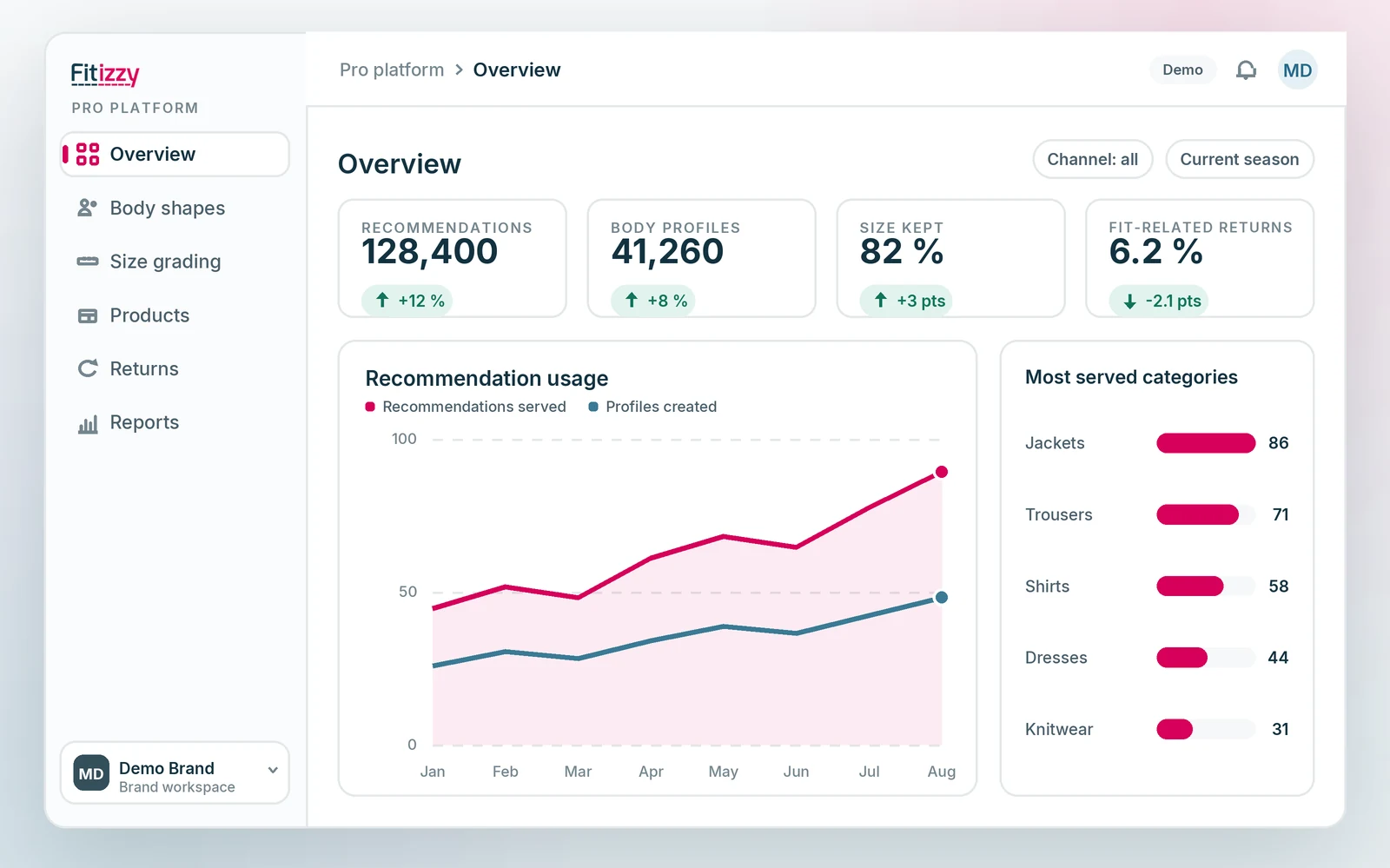
The SaaS platform where you find the morphological data collected and the impact of the solution.
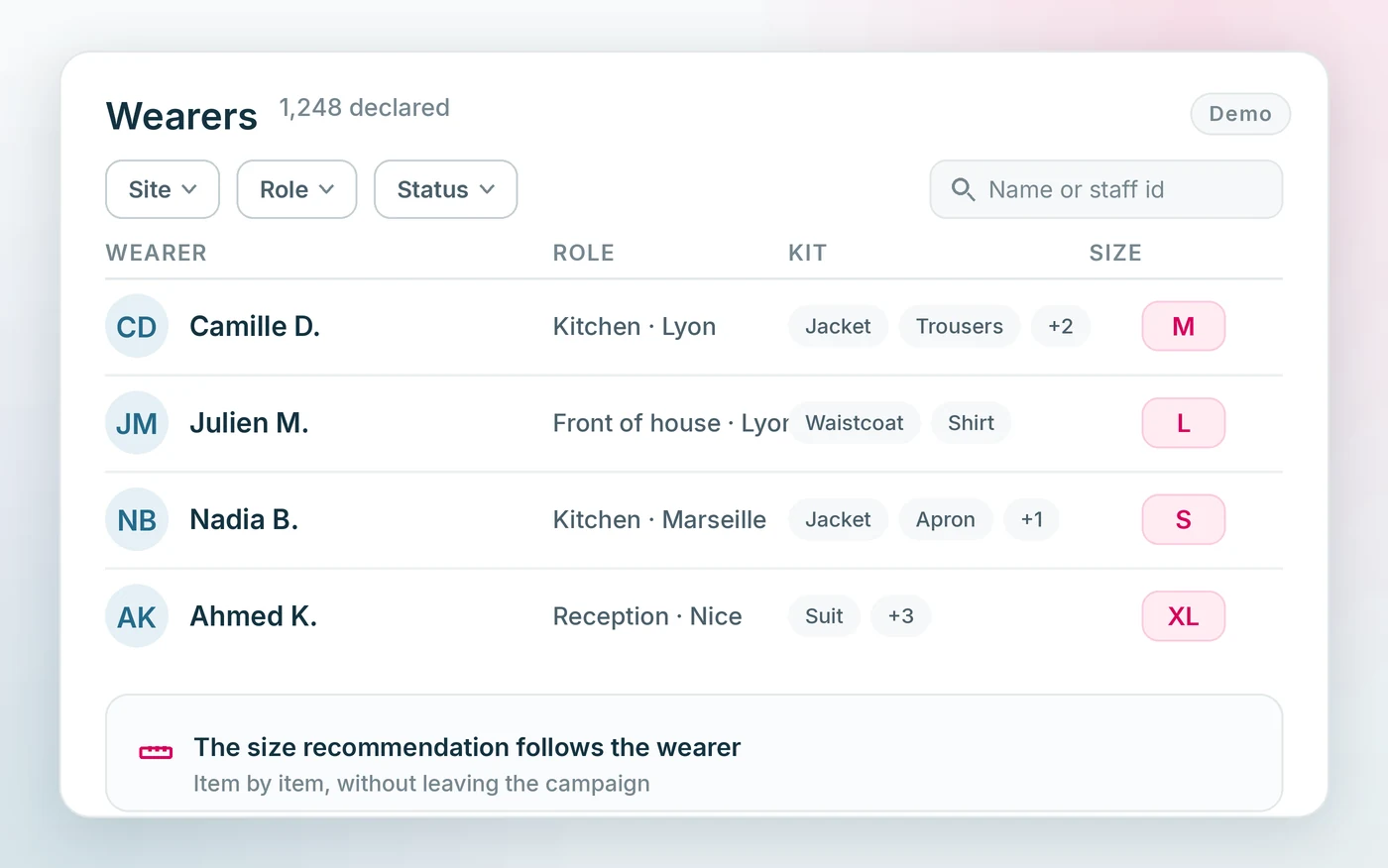
Outfitting a company is not a series of isolated purchases, it is a season: one collection opened to a population of wearers, orders arriving in waves, returns to handle and stock to put back into circulation.
Fitizzy Pro runs that season end to end. The campaign sets out who orders what and until when, size recommendation travels with every wearer as they order, and the rules flag what deserves a human look.
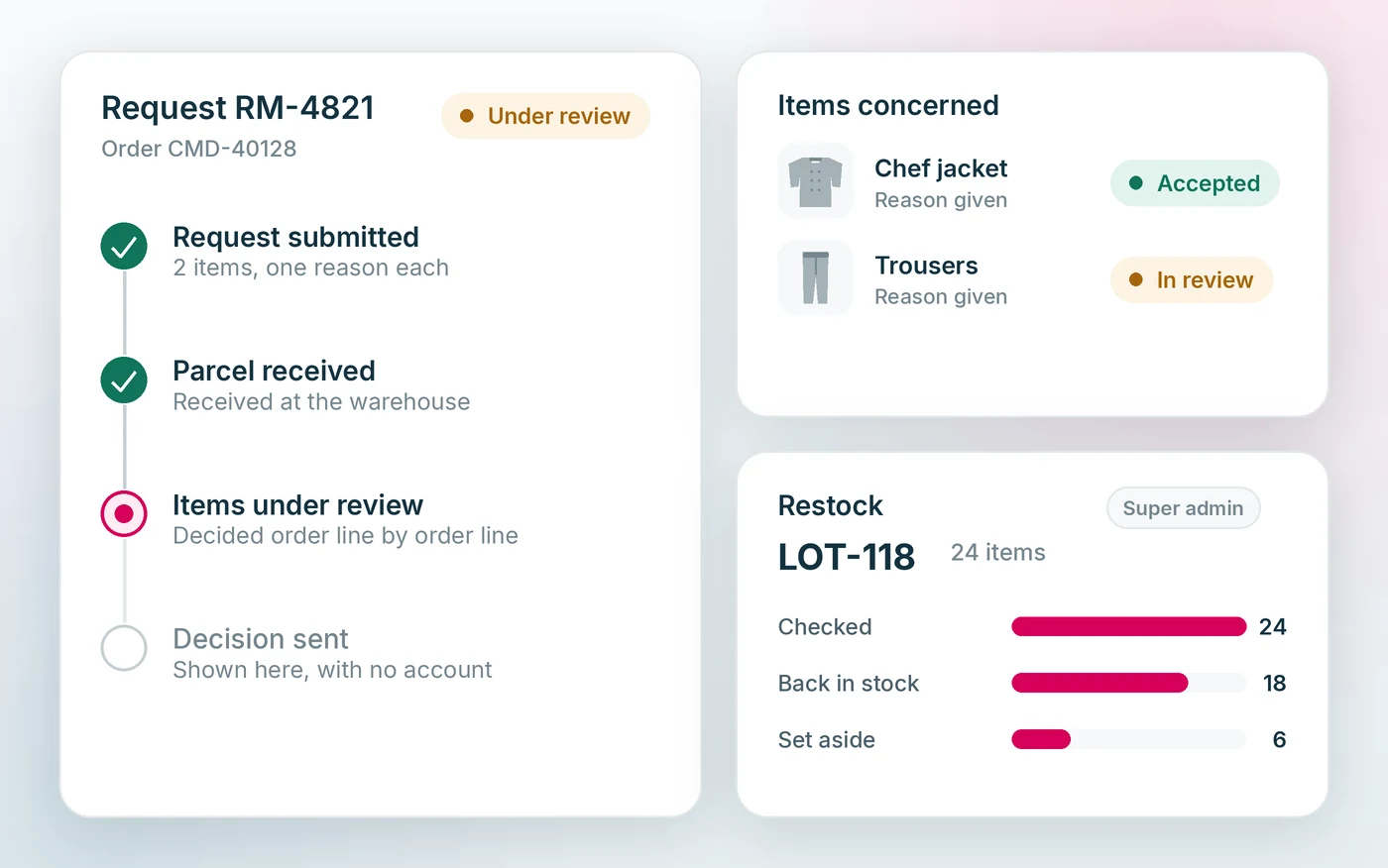
A garment that does not fit comes back, and what comes back has to go out again. Return Manager takes in returns from several client companies in one tool, each under its own styling.
The wearer finds their order, submits their request and follows its progress through to the decision. What is accepted is grouped into restock lots.
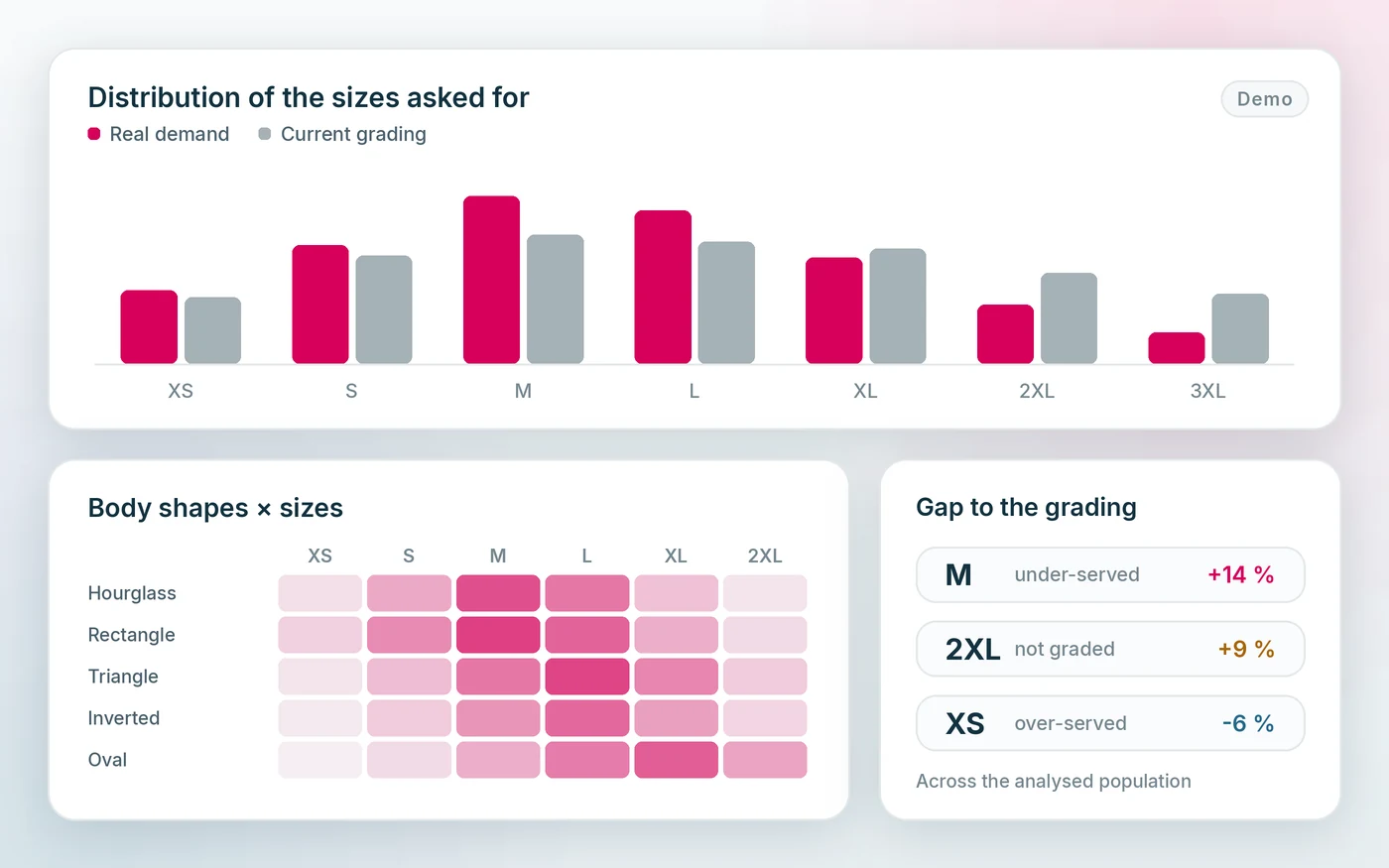
You already know what your customers buy, what they send back and what they browse. What your systems do not hold is the morphology of those people set against your products: which body shape asked for which size, on which cut, and what came back afterwards.
Every size recommendation produces that data. We hand it back to you in Plateforme Pro without replacing anything you run: it enriches what you already measure and feeds your collection and stock decisions.
Showcase your products with services that improve the shopping experience, whatever the distribution channel.
Choose a turnkey solution and analyse each purchase journey.
A fashion return is often decided before the order, when the customer picks a size. What works: deal with size upstream, record every reason, and send the information back to the grading.
Behind the phrase “virtual fitting room”, fashion stores mostly use simpler tools: a size recommendation on the shop floor, a sales associate with the right device, a kiosk that answers. Here is what helps, and what is still a promise.
Outfitting a company happens by season, not by order. Here is how a Fitizzy Pro campaign runs, from opening day to restocking the returns, and what it asks of your teams.