

"Help! I can't find my size in store!"
In the textile industry, the gap between what brands offer and the measurements of the French population has never been wider. That is what emerges from a Kantar study reported by the Journal du Textile. According to the survey, far too many shoppers say they cannot find their size when they go into a store: 19.2% of women and 15.8% of men! There is a genuine "sense of mismatch between the size grading of the products on sale and the reality of people's measurements".
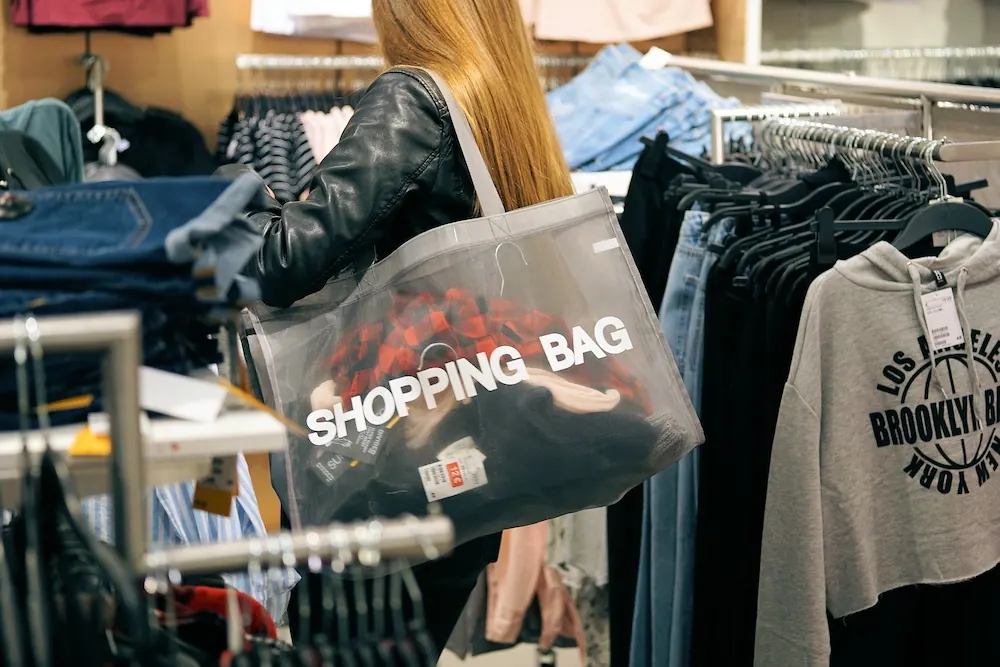
At a time when bringing shoppers back into stores is crucial, answering this question really matters.
All the more so because retailers are stepping up their efforts to hunt down unsold stock: launching e-commerce sites, appearing on marketplaces, offering free returns. And because, from 1 January 2022, the law will forbid them from destroying unsold new products. Which means they will have to "give away, repurpose, reuse or recycle their unsold stock". In short, reinvent themselves.
Let's look together at the reasons behind these gaps between what is produced and real measurements, and at the solutions for closing them.
Reason 1: height is apparently almost never taken into account when collections are designed.
Among women over 65, for example, 37% say they are less than 1.60m tall. Yet most of the clothing aimed at that group is standardised for heights between 1.65m and 1.72m. With "small frames" left out, these shoppers often have to have their clothes altered. Hardly conducive to a good user experience.
Reason 2: the vast majority of what is on offer comes in sizes 36/38, while 41% of women wear sizes 42, 44 and 46.
According to Hélène Janicaud, head of the Fashion division at Kantar, "the latter are desperately short of options, while the other half of women are buried under an offer that does not necessarily match their expectations." Today, one French woman in 4 wears a size 44 or above. Yet the textile industry still treats them as a niche.
Reason 3: brands fail to anticipate men shifting "outside the standards"
"Turning forty is also a turning point for men when it comes to choosing clothing sizes. (…) While a small proportion of women aged 35 to 49 wear the equivalent of a size 46, among men in the same age bracket that size applies to a quarter of them." This data is not necessarily taken into account by designers.
The solution: analyse the data from your sales
According to Fevad (the French e-commerce and distance selling federation), in 2020 the return rate on online sales reached 24%. That percentage represents a considerable cost for brands, especially as they are the ones footing the bill when an order is sent back because of a sizing error.
To produce as accurately as possible for their customers' body shapes, we advise retailers to take a close look at the data from their in-store and online sales.
There are several ways of gathering this data. Discover them here.
Among those methods are our own solutions: our size recommendation plugin (online) and the mobile app and the Fitiroom (in store).
For several years now, our recommendation plugin has been used by consumer clothing brands (Promod, Cyrillus, Celio…) and by professional clothing and uniform makers (Mulliez-Flory, Bragard). Their goal: to get a better grasp of their customers' needs and of market trends.
Installed on these brands' e-commerce sites, the solution offers shoppers size recommendations based on the product they have chosen.
On the brand side, the plugin supplies several particularly interesting pieces of data:
- the number of models and sizes sold online,
- basket value,
- products added to the basket,
- purchase or basket abandonment,
- the content of the recommendation given,
- the number of pages viewed on their e-commerce site,
- the number of clicks on the call-to-action button,
- the number of times the plugin was opened by a visitor.
Through a dedicated dashboard, each brand finds all of its data set out as charts. These performance indicators are used by its pattern makers to:
- analyse the morphological data of the moment,
- identify the body shapes most in demand among customers,
- optimise new collections,
- manage stock allocation better.
This approach may look ahead of its time today. In the very near future it will be the norm. To optimise your brand's costs. To protect the environment.
Would you like to digitalise your purchase journeys?
Contact our team to find out more and to get a personalised demonstration.
Request a demo