

Transform the role of your sales assistants
At a time when everyone is looking for innovative solutions to enhance in-store purchase journeys, sales teams are suffering from that standardisation and are stepping back from the customer relationship to focus on products. Today, 47% of sales assistants leave their customers to go and check stock. Shoppers experience this as a frustration, when 45% of them want personalised information about the products.
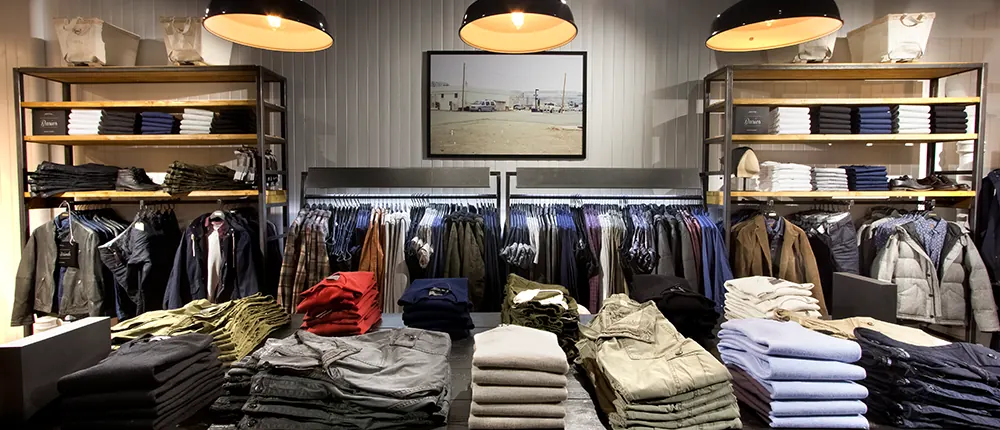
Sales teams overwhelmed by in-store issues
Even though 65% of French shoppers still buy in store, shopping habits and expectations are changing. On the one hand, consumers want to be independent throughout their purchase journey. When a sales assistant comes over, customers can feel pressured and disturbed. It can even put them off walking into a shop at all if they know the sales assistants are too forward. Only 22% approach a sales assistant when an item is not on the shelf. The strategies used today to strike up an interaction with a customer are therefore no longer in step with what that customer expects.
On the other hand, sales assistants can no longer look after the customers who want to be informed. Sales teams are no longer able to keep a store interactive. They are mainly relegated to merchandising, filling shelves or managing stock in the back room. 80% of them lose their time tidying up in the store or in the fitting room area. Customers who want personalised information about products (45% of them do) are left feeling abandoned as a result. Understanding of body shape, styling advice… Consumers leave empty-handed because the sales teams are neither available nor informed.
The fact that sales assistants are assigned to product management pushes them to stop investing themselves in the company. Loss of motivation, working out of necessity, doing the bare minimum… Sales teams no longer feel committed to the retailers they work for. How can we explain this lack of involvement in store?
Retailers lagging behind
If we turn to the retailers’ side, we can see that some chains have sales strategies that have not shifted in decades. Yet in the retail landscape, and in clothing in particular, a new trend is putting down lasting roots: phygital, or the use of digital tools and methods in the places where goods are sold.
In France, though, many ready-to-wear brands are behind when it comes to digitalising their stores. Fear of change, reluctance about new technology, limited knowledge of the innovations on offer, no dedicated budget… Plenty of factors are holding manufacturers back from diving into digital and reinventing themselves.
And yet the clothing sector keeps posting falling results. Over the past 10 years, ready-to-wear has lost 10% of market share. Sales are being hit ever harder, with a 9.5% drop in May 2018 compared with May 2017. Why this constant decline? Because a new group of active consumers has arrived on the fashion market: Millennials. Their way of consuming is disruptive compared with previous generations. Digital is their preferred way to shop. 76% of them research their clothing purchases online before buying them in store. In store, they expect personalised services that give them a digitalised user experience (Click & Collect, augmented reality, interactive window displays…). French fashion retailers are not yet innovative enough to offer this generation an interactive customer experience and an omnichannel purchase journey.
How do you bring digital into your sales strategy?
As we have seen, phygital means using digital tools in store: interactive kiosks, mobile tills, connected mirrors… A range of technologies that allow major brands to offer new services in line with what consumers need.
At Fitizzy, beyond offering new shopping experiences, we tackle the main problems that hold back the development of a digitalised sales strategy. To free up sales assistants’ time and put their role back at the heart of the customer relationship, our solutions address the logistical obstacles they come up against. Stock optimisation, smoother fitting room traffic, management of the sizes available in store… Our set-up is built around 4 products : the Fitiroom, interactive kiosks, the mobile app and the Fitiforms for sales assistants.
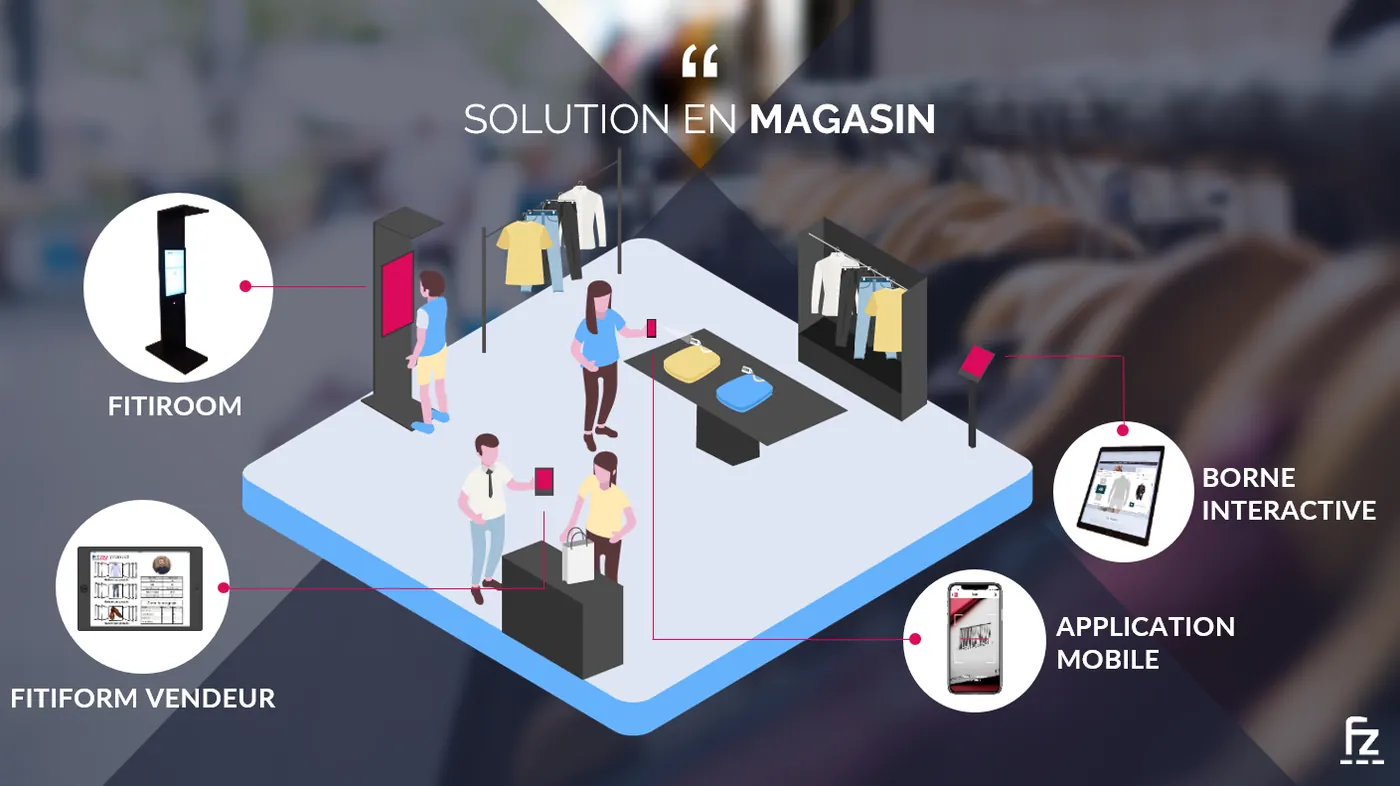
With these services, the sales assistant is put back at the centre of the store strategy. They become the customer’s personal coach and guarantee them the best possible shopping trip. At a glance, the sales assistant can tell the customer whether an item is available, or help them put a look together once the right size has been recommended. Sales assistants gain a better understanding of the customer thanks to the data collected by our set-up. With the consumer’s morphological data, but also with usage data, sales teams invest themselves in the customer relationship once again. Their role is transformed and they go from merchandisers to customer advisers.
The sales assistant finally becomes the key link once again between the customer and the personalised services offered in store. Their approach is more strategic and makes it possible, thanks to morphological and environmental data, to rethink the customer experience and purchase journeys in stores. All of it with genuine insight into what consumers expect and how they behave.
Fitizzy helps you go phygital, get in touch with our team!
Our team is on hand to give you personalised demonstrations
Book an appointment