

The size chart is dead, long live the size chart!
The size chart, which appeared at the same time as mail-order shopping, is an essential tool in the clothing industry that is slowly disappearing from consumers’ view. Despite the changes in the industry, it has failed to make its digital transformation and shoppers get lost when they look for their size. Sizes have always varied from one brand to another, and even within a single brand from one product category to the next. Today, new alternatives to the size chart are appearing to deliver a better shopping experience.

Size charts and changing body shapes
The choice of size is essential to closing a sale in ready-to-wear. The size chart is therefore the go-to service found at every fashion retailer to help customers find their size.
Chest, waist, hips… First, though, you have to take your measurements. It is a step that takes time and calls for a good grasp of how to measure properly. Consumers have to understand a size chart and know how to use one, which is something of an act of courage in their purchase journey.
What is more, body shapes are changing today, while brands are not.
92% of consumers say size charts are difficult to read.
What about you, would it help you go ahead and buy?
Vanity Size, the death of the size chart
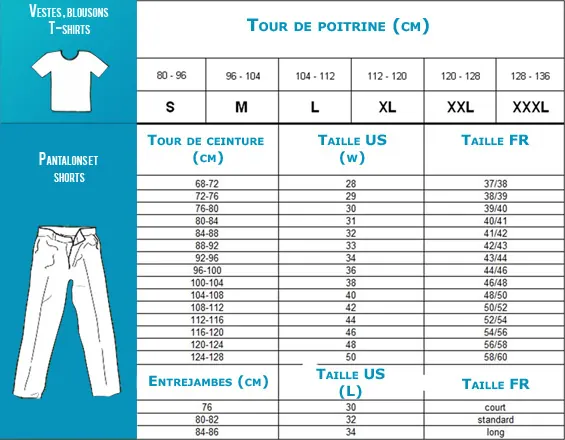
In France, the regulations on clothing sizes are not strict enough, so it is impossible to impose a single, consistent sizing system. Depending on the country and the manufacturer, the same size can vary by as much as 10cm between two brands. On top of that, one retailer may use different sizing systems for tops and for bottoms, with French sizes (36, 38, 40, 42) and American ones (S, M, L, XL), for example.
Once you take all of that into account, the size chart turns into a complex table of measurements that is impossible to make sense of. 92% of consumers say that size charts are difficult to understand. The size chart therefore becomes an obstacle for consumers, who see it as a barrier in their purchase journey and are discouraged from completing their order.
Even though 1 woman in 3 and 1 man in 4 cannot find their size, brands persist in not standardising the sizes they offer. That gap between people’s body shapes and the sizes found in the shops is explained by Vanity Size (or “taille flatteuse” in French). Some retailers inflate their commercial sizes in order to flatter their customers’ egos. A woman who normally wears a 40 will fit into a 38 at Zara, while at Gap she will be a 42.
Size has therefore become a central issue in the clothing industry. “Wrong size” is the number one reason for returns, and sending a product back costs the consumer close to €10. In the end, more than 40% of consumers say they are dissatisfied with the sizing at various brands… Enough to give the fashion industry pause for thought.
Clothing size conversion chart
These are the most common equivalents in ready-to-wear. Treat them as a starting point: as we have just seen, every brand reads them its own way.
Women
| Size | UK | US | France | Italy |
|---|---|---|---|---|
| XS | 6 | 2 | 34 | 38 |
| S | 8 | 4 | 36 | 40 |
| M | 10 | 6 | 38 | 42 |
| L | 12 | 8 | 40 | 44 |
| XL | 14 | 10 | 42 | 46 |
| XXL | 16 | 12 | 44 | 48 |
Men
| Size | Chest | European size |
|---|---|---|
| S | 88 to 96 cm | 44 and 46 |
| M | 96 to 104 cm | 48 and 50 |
| L | 104 to 112 cm | 52 and 54 |
| XL | 112 to 120 cm | 56 and 58 |
| XXL | 120 to 128 cm | 60 and 62 |
Jeans
The W on a pair of jeans is the waist in inches. To get the French size, add about 10: a W30 is a French 40.
| W size | French size |
|---|---|
| W26 and W27 | 36 |
| W28 and W29 | 38 |
| W30 and W31 | 40 |
| W32 and W33 | 42 |
| W34 | 44 |
| W36 | 46 |
| W38 | 48 |
Finally finding your clothing size
With all these differences between brands, products and sizing systems, the size chart can no longer be a reference for customers. It is an impersonal experience that offers the consumer no guidance, and a brake on sales for brands.
That is why, thanks to algorithms and the use of data, ready-to-wear retailers can offer their customers new services for finding the right clothing size. After 3 years of research and development, Fitizzy has developed a solution that makes for a far easier customer experience for brands looking to tackle the industry’s biggest problem: recommending the size best suited to the customer’s body shape.

As well as helping brands advise their customers, we guarantee a fall in size-related returns. A better-advised customer is a satisfied customer, and one who will buy again. Average basket value and conversion rate are therefore higher.
The leaders in e-commerce have put the customer experience at the heart of their strategies to help shoppers choose their size — the likes of Promod, Brice, Cyrillus and Motoblouz… What about you?
Are you keen to personalise your purchase journeys?
Get in touch for a demonstration and personalised advice
Request a demoFrequently asked questions
What French size is a W30?
A W30 is a French 40. The rule of thumb is to add about 10 to the W: a W28 is a 38 and a W32 a 42.
Is a French 42 an L or an XL?
Most often an XL, with L covering the 40. Many brands file the 42 under L, though: that is exactly the blur this article describes, and why a recommendation built on body shape is more reliable than a chart.
How do I find my size as a man?
Measure your chest under the arms. A European jacket size is roughly half of it: 96 cm gives a 48, which is a medium.