

How do you reassure customers as they buy online?
85% of internet users shop online. Online stores are multiplying, and the offers and services on them are leaving shoppers' heads spinning. Why has building customer loyalty become so complicated? How do the big ready-to-wear brands such as Promod, Asos and Levi's set themselves apart?
Online shopping, a two-speed business
In France, e-commerce generated 81.7 billion euros in 2018, a rise of 14.3% on the previous year. M-commerce (buying online from a smartphone), meanwhile, posted strong growth of 50% in 2018. In terms of spending, French e-shoppers bought an average of €2,200 worth of goods online last year.
In online retail, fashion and clothing accounts for 13% of market share and has become the fourth biggest-selling sector on the web. The industry keeps seeing purchase frequency rise even as its revenue falls. Out of 182,000 active retail sites in France, Veepee (formerly Vente-privee.com) is the most visited site in the fashion sector. Every month, the marketplace records an average of nearly 15 billion unique visits.
Today, 66% of online shoppers bought fashion in 2018. The figure keeps climbing, yet it sits oddly with the gap between online traffic and what brands actually earn. Consumers are becoming more demanding and less forgiving towards retailers. They no longer think twice about moving to another brand if the first one has let them down. So which frustrations are stopping them from going through with their purchases?

Consumers in search of authenticity
With online retailers up 10% in 2018 compared with 2017, the choice available on the internet has multiplied, driven in particular by the emergence of specialist sites and by rising traffic on marketplaces. So many retailers leave shoppers confused: they feel less and less committed to brands and find no values to hold on to. Customers therefore fall back on how practical a product is. They look for the best value for money, endlessly trying out one brand after another.
It is a never-ending tussle between online retailers and online shoppers. The former try to keep up with market trends by running cut-price offers almost all year round — for want of anything that really sets them apart — while the latter are caught between bargain-hunting and the search for new services that would renew their commitment to a brand. Consumers want clear information about products. They want to picture themselves in a garment in concrete terms, weighing up all sorts of criteria: where it comes from, the conditions it was made in, its quality, its cut, its size grading and so on.
To reopen the conversation with their audience, brands need to add experiential value to the buying process. But how do you stand out from the competition while meeting what consumers expect?
Putting the consumer back at the heart of your strategy
Online shoppers want commitment and reassurance when they buy. For brands, the tricky part lies in understanding what their customers need and in putting the right services in place. When an e-shopper is hunting for information before completing their basket, practical, effective help has to be within reach.
Shoppers no longer want to waste time working out whether a product really suits them. They will be convinced that the item they have their eye on is the right one if they manage to picture themselves in it. Customer reviews, product tests, fit advice, size guidance, presentation videos, personal shopper chatbots… All of them are essential if you want to reassure a customer and see the purchase through.
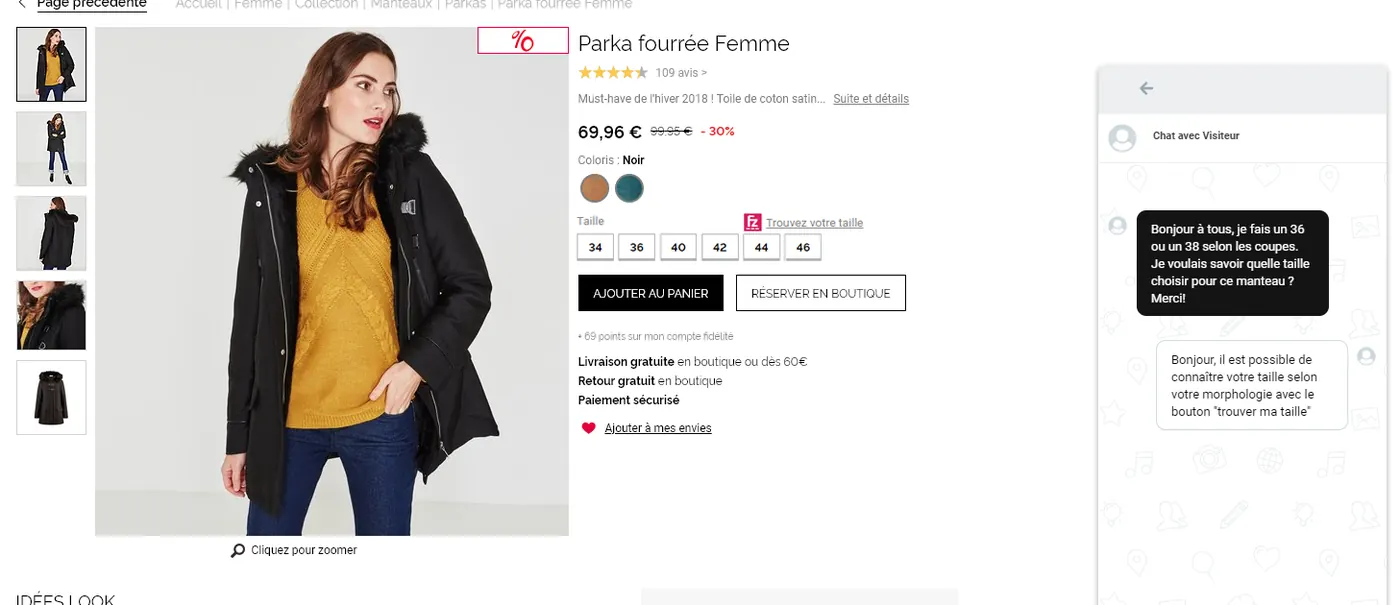
Promod, our partner for the past five years, runs a whole set of complementary tools on its e-commerce site to make shopping easier and more enjoyable for its customers. In practical terms, the retailer optimises its product pages with relevant reassurance features:
- Photos of the product on its own and photos of it being worn: this lets the shopper see the product from different angles, and see how it hangs on a real body shape
- A detailed product information block (technical description, composition, care instructions, dimensions and more): the brand plays the transparency card by describing its items in as much detail as it can
- Size guidance button: the Fitizzy tool is there to tackle the sector's stubborn problem, namely knowing your size in a product you have never worn before
- Customer reviews under the product, with ratings and comments: a customer unsure about the quality of a product is reassured straight away by the score the item has been given
- Community chat: dedicated to each product, this chat opens up a conversation between long-standing and new Promod customers
- Purchase information (delivery, availability, returns and so on): the essentials for putting online shoppers at ease
All of this makes promod.fr the best women's ready-to-wear site for shopping with complete peace of mind, according to the ranking published by Capital magazine in May 2018. Promod now records more than a million visits a month online, along with a high share of returning visitors.
By managing to reassure its online customers, Promod has built real loyalty. The result: the retailer now has more than 200,000 followers on its French social media channels, and on 23 January it opened a platform dedicated to its growing community.
Offering a complete range of tools that answer the demand for technical and practical information is the key to reassurance and customer loyalty.
Would you like to offer an innovative service on your e-commerce site?
Which tools do you need? How should you adapt them to your customers?
Meet our team and start building loyalty with your audience.
Contact our team