

7 tips for improving the user experience on your product pages
In an online shop, the way a product page is put together is absolutely crucial. It has to be clear, effective and creative, and it has to anticipate the questions your customers might ask themselves. Your goal here is to reassure them as they buy and to give them the information and advice they would have got from a sales assistant had they made the trip to the shop.
To help you write high-quality product pages, here are 7 recommendations.
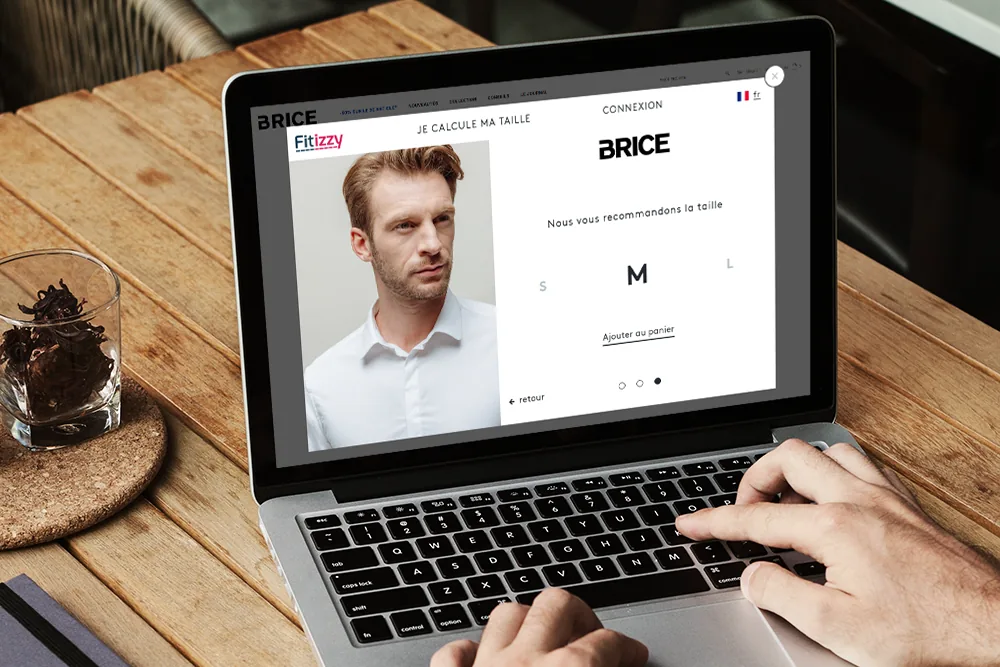
#1: Install a size recommendation plugin
When they buy a garment, a great many shoppers wonder which size is the right one. In most cases, they turn to the retailer's size chart. Laid out as a table, that chart often leaves buyers none the wiser about which size to order.
By adding a size recommendation plugin such as Fitizzy's, shoppers can fill in a quick questionnaire and receive an accurate size recommendation within seconds.
On your e-commerce site, and more specifically on your product pages, the plugin is installed as a “Find your size” call-to-action button.
- When a shopper clicks the button, they are asked to enter a few details about their body shape.
- That data is cross-referenced with the brand's technical information to give them a recommendation of the best-fitting size for the garment they have chosen.
#2: Show beautiful photos and videos of your product in real-life settings
To win your visitors over, give them several photos and videos of your product:
- against a white background, but also in a real-life setting,
- And from different angles.
The idea here is to help them picture the item, so that there are no surprises when the parcel arrives.
#3: Write a detailed description of your product
Product descriptions should be short, dense and detailed all at once. That description needs to bring out the key features of your product: its selling points, its benefits, what it is made of, which colourways are available, and so on.
#4: Share your customer reviews
Adding customer reviews to your product page can have a considerable impact on your shoppers' buying decisions. Looking up what other people think of a given product has become second nature, a habit. A customer review is reassuring ahead of a purchase.
#5: Suggest similar products
Add a feature to your e-commerce site that suggests similar products at the bottom of your product page. If a shopper is hesitating, this feature will give them access to a wider range of options.
#6: Harness the power of social media
Social media plays an important role for people who buy clothes online. Instagram above all. Some brands now add an Instagram feed to their product pages, gathering together images of the item being viewed. That allows shoppers to see the product in a real-life setting, worn by other people. The aim: to help them picture themselves in it and imagine how the garment might hang on them.
#7: Don't forget the legally required details and the transactional information
Here are the mandatory items you must not forget:
- The price, of course — it has to be visible at a glance.
- The currency used on your site
- Product availability: is there any stock left?
- Payment options: Visa, PayPal, and so on.
- Your terms and conditions of sale
Would you like to digitalise your purchase journeys?
On an e-commerce site, building a product page takes time, so don't skimp on this stage. Once your template is ready, test it with a few users to check that you haven't forgotten anything.
A good product page:
- will reassure your customers as they buy and boost your online sales.
- will allow you to cut your order returns considerably.
If you would like advice on the subject, and to see a demo of our size recommendation plugin, do get in touch.
Request a demo